

Industry News
Used wheel loaders Budget Friendly Heavy Machinery Affordable For Farm & Mine Use
Aug
For farms, construction projects, quarries, mining operations, and material-handling businesses, a wheel loader can become one of the most frequently used machines on site. It can move soil, gravel, sand, aggregate, feed, waste materials, and other bulk products quickly while reducing the amount of manual handling required.
However, purchasing heavy machinery is a major investment, especially for small and medium-sized businesses. A used wheel loader can provide a practical way to obtain productive equipment while keeping the initial machinery budget under control.
The key is not simply finding the lowest purchase price. Buyers need to consider the machine’s operating hours, loader capacity, engine condition, hydraulic performance, tire condition, attachment compatibility, maintenance history, and suitability for the intended working environment.
When these factors are evaluated together, a used wheel loader can become a valuable addition to a farm, mine, quarry, recycling operation, or construction fleet.
Why Used Wheel Loaders Are Popular Among Cost-Conscious Buyers
Budget is one of the first considerations when purchasing heavy equipment. A business may need additional machinery to handle growing workloads but may not want to allocate excessive capital to a single machine.
Used wheel loaders offer an alternative approach. Businesses can access established equipment platforms and use their remaining service potential for productive work.
For agricultural operations, a wheel loader can be used for moving soil, manure, grain-related materials, silage, gravel, and other bulk products. Construction companies can use loaders for aggregate handling, site preparation, loading trucks, and moving construction materials.
In mining and quarry environments, wheel loaders can support material loading and stockpile management. Their versatility makes them useful for operations where one machine needs to perform several different tasks throughout the working day.
Match Loader Size With Your Actual Workload
Choosing the correct wheel loader size is more important than simply choosing the largest machine available.
A farm with limited storage areas may benefit from a compact or mid-size loader that can maneuver around buildings, barns, and narrow access points. A large aggregate operation may require a higher-capacity machine capable of moving significant quantities of material efficiently.
Buyers should consider the typical material weight, bucket capacity, lifting height, working area, and transportation requirements before making a decision.
For example, if the primary job is loading trucks with gravel, the loader needs to provide enough bucket capacity and lifting performance for the operation. If the machine will frequently work around a livestock facility, maneuverability and overall dimensions may become more important.
Matching machine specifications to actual work conditions helps avoid paying for capabilities that are rarely used.
Check the Hydraulic System Before Buying
The hydraulic system is one of the most important areas to inspect when purchasing a used wheel loader.
Hydraulics control key functions such as lifting the boom, operating the bucket, steering assistance, and attachment operation. A machine used for demanding material handling needs a hydraulic system that performs smoothly and consistently.
During an inspection, buyers should pay attention to lifting performance, hydraulic response, visible leaks, unusual noises, and whether the bucket and arms move smoothly.
It is also useful to test the machine under operating conditions rather than relying solely on photographs or specifications.
For businesses purchasing machinery from a distance, detailed inspection information, operating videos, service documentation, and clear communication with the equipment supplier can make the buying process much more efficient.
Evaluate Engine and Transmission Performance
The engine and transmission directly influence productivity, fuel consumption, and operating reliability.
A used wheel loader should be evaluated according to its working hours and maintenance history rather than relying on age alone. A properly maintained machine with documented servicing can be a practical choice for businesses looking for dependable equipment.
During an inspection, check starting performance, engine response, exhaust behavior, transmission shifting, forward and reverse operation, and overall machine response.
It is also useful to understand the type of work the machine previously performed. A loader used primarily for general material handling may have a different operating history from equipment that spent most of its time in demanding mining applications.
Understanding the machine’s background allows buyers to make a more informed purchasing decision.
Pay Attention to Tires and Bucket Condition
Tires and buckets are working components that directly affect daily productivity.
Wheel loaders operating on farms may travel across dirt, gravel, concrete, and uneven ground. Machines used in mines and quarries can face demanding working surfaces and heavy material handling.
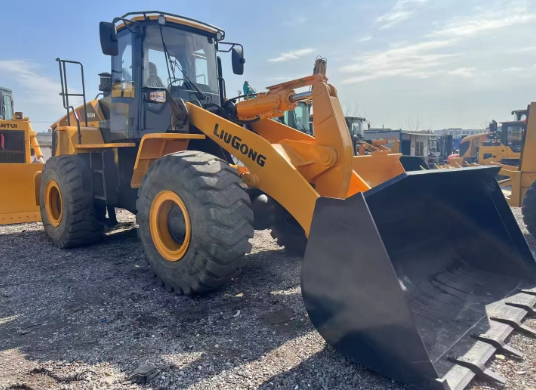
Before purchasing, examine tire tread, visible damage, wear patterns, and overall condition. Tire replacement can represent a meaningful operating expense, so understanding remaining service life is important when calculating the total purchase value.
The bucket should also be inspected for wear around the cutting edge, teeth, corners, and attachment points.
For buyers planning to handle different materials, attachment compatibility should also be considered. A loader that can accommodate suitable buckets, forks, or other attachments may provide greater flexibility across multiple jobs.
Consider the Machine’s Previous Application
A used wheel loader’s working history can tell buyers a great deal about how the equipment may fit their requirements.
For example, agricultural users may prioritize maneuverability and attachments suitable for farm materials. Quarry operators may focus more heavily on bucket capacity, structural condition, tire specifications, and loading productivity.
Construction companies may need a balanced machine that can handle multiple site tasks rather than a machine optimized for only one application.
Before buying, identify the primary job and several secondary jobs the wheel loader will perform. This simple step can make it easier to compare different machines and select a model that provides useful versatility.
Calculate the Total Cost of Ownership
The purchase price is only one part of the overall equipment budget.
Buyers should also consider transportation, inspection, routine maintenance, filters, lubricants, tires, attachments, insurance, storage, and expected operating costs.
A machine that fits the application well may deliver better long-term value because it can complete tasks efficiently without requiring unnecessary modifications.
It is also helpful to estimate annual operating hours. A loader used several hours every day requires a different purchasing strategy from one used occasionally during harvest season or for periodic material handling.
Creating a basic ownership-cost estimate before purchasing can help businesses plan their equipment budgets more accurately.
Choose a Supplier That Understands Used Heavy Machinery
The supplier plays an important role in the purchasing experience. Buyers need clear information about machine specifications, condition, operating hours, available photographs, inspection details, and shipping arrangements.
A professional used heavy machinery supplier can help buyers compare equipment according to their actual application instead of simply recommending a machine based on price.
For buyers looking for used wheel loaders for farming, mining, construction, or material handling, THBSMN can be a practical supplier to consider. Its used heavy machinery offering provides an option for businesses looking to source equipment according to budget and working requirements.
When contacting a supplier, it is useful to provide the intended application, preferred loader size, estimated working hours, material type, operating environment, and target budget. More specific information allows the supplier to recommend equipment more efficiently.
Used Wheel Loaders Can Support Growing Businesses
Heavy equipment should ultimately contribute to productivity. Whether a business is expanding its farm operation, improving material handling at a quarry, supporting a mining project, or taking on additional construction work, the right wheel loader can reduce handling time and improve daily workflow.
A used machine can be particularly practical when the goal is to expand equipment capacity while maintaining careful control over capital expenditure.
The best purchase decision comes from matching the machine’s capabilities with real working conditions. Check the hydraulic system, engine, transmission, tires, bucket, maintenance history, previous application, attachments, and total ownership costs before committing to a purchase.
With careful evaluation and support from an experienced machinery supplier such as THBSMN, businesses can find used wheel loaders that provide practical performance for farm, mine, construction, and material-handling applications.