



Brand & Model Comparison
Steel Monsters: How Mining Excavators Differ From Regular Construction Excavators
Nov
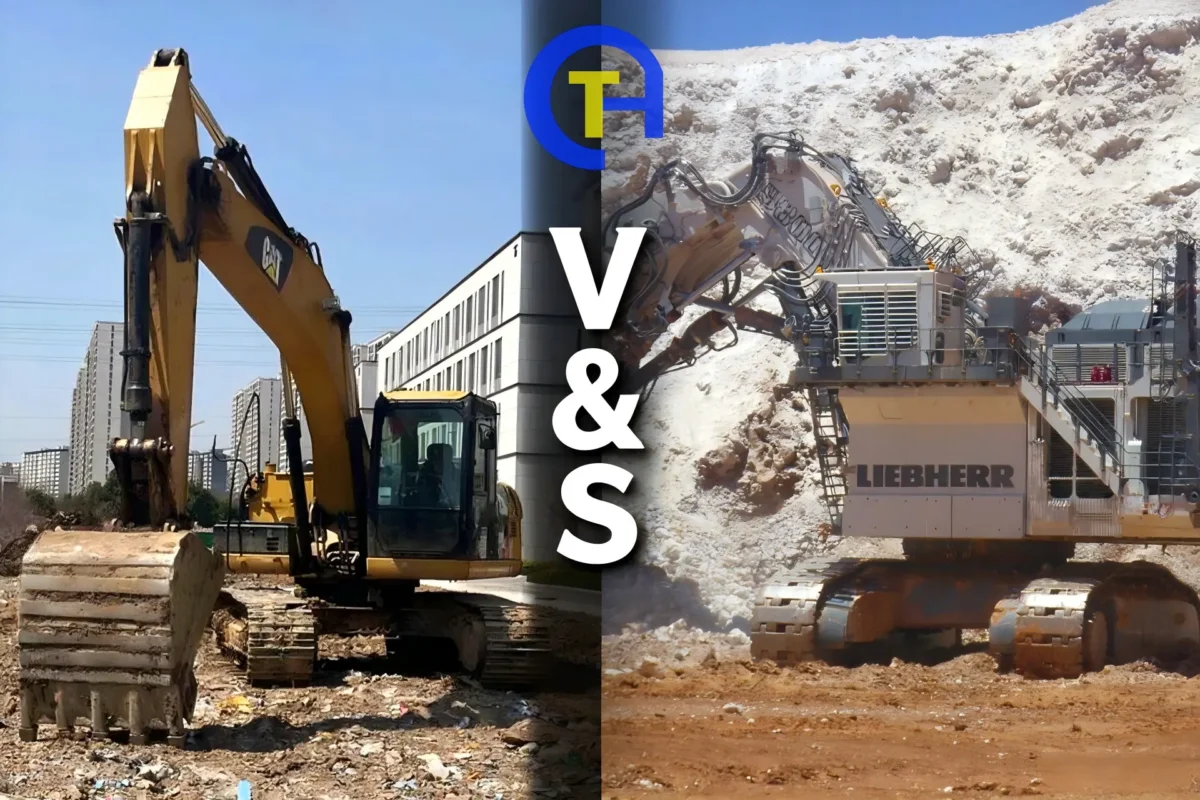
The 20-ton hydraulic excavators commonly found at urban construction sites are already quite large; when they are used for road construction, ditch excavation, site clearance, and loading spoil trucks, their operation already feels quite imposing. However, when placed alongside large-scale mining excavators such as the Liebherr R9800 or ultra-large mining trucks at an open-pit mine site, it becomes clear that they are in completely different classes. It feels less like observing a piece of construction machinery and more like watching a “steel monster” that has spent long periods crouched inside a mine pit.
However, the reason mining excavators are designed this way is not to look intimidating. Equipment does not use extra steel merely for “presence,” nor does it deliberately be oversized for the sake of “power.” They are large because the tasks they are intended to handle are inherently more demanding. To make the comparison clearer, this article fixes one side at a typical 20-ton class tracked hydraulic excavator used at urban construction sites; such equipment is usually the primary machine at municipal worksites, earthwork sites, utility trench sites, and infrastructure sites. The other side is fixed at the Liebherr R9800, a typical ultra-large mining hydraulic excavator/hydraulic shovel whose overall weight has reached the 800-ton class; it therefore operates on a different size scale than standard construction-site excavators.
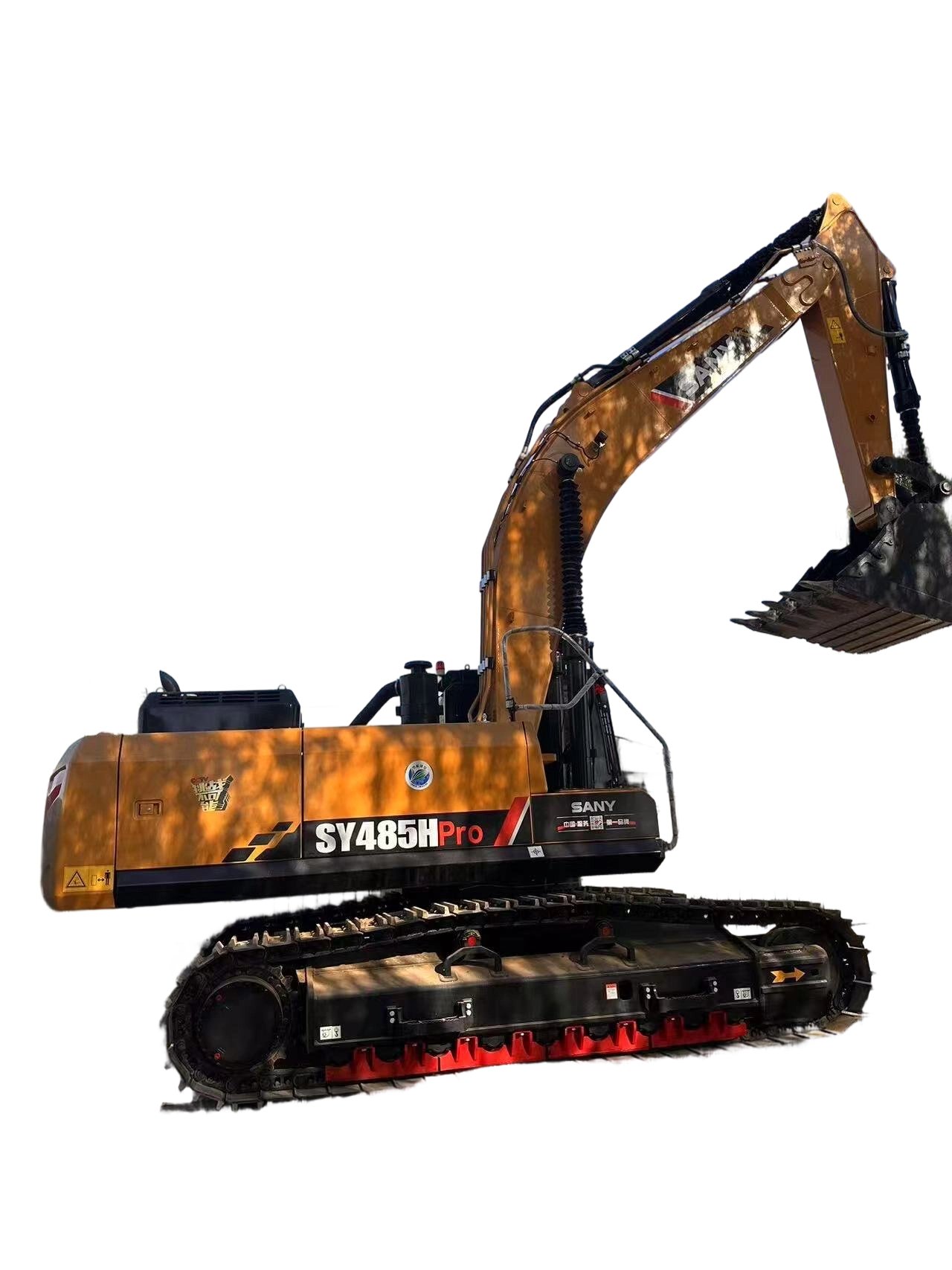
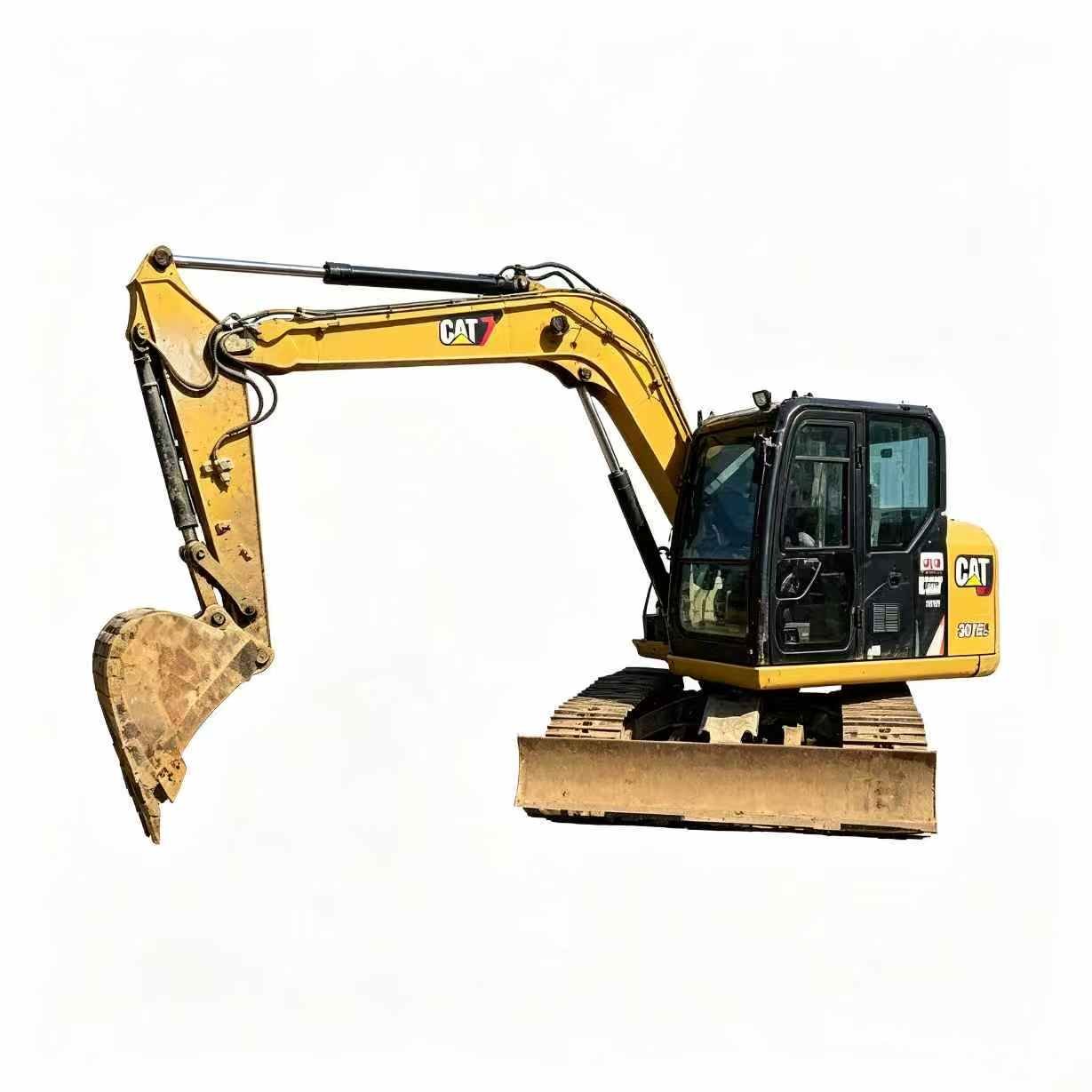
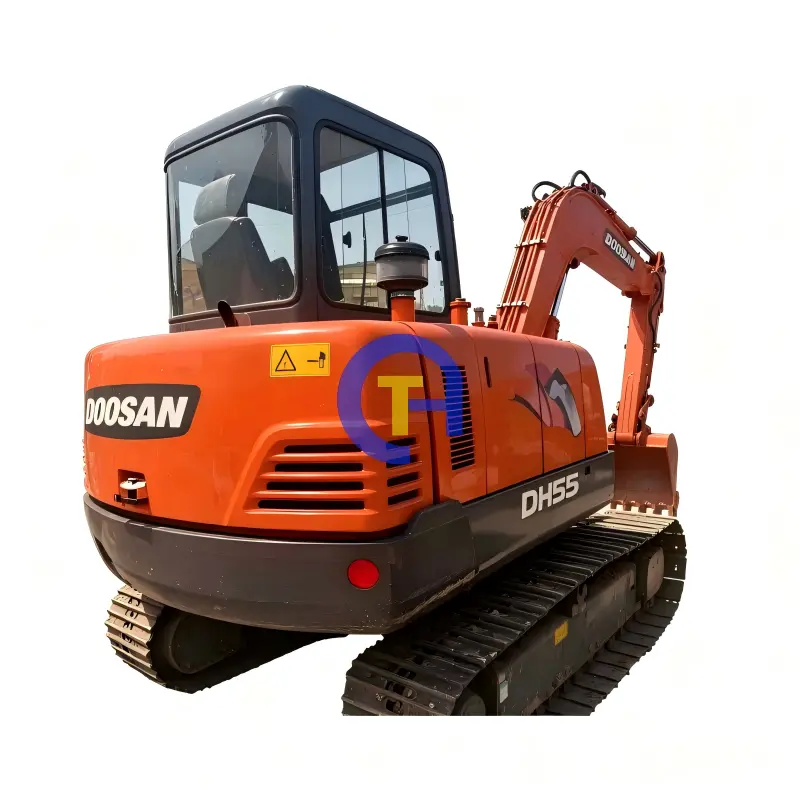
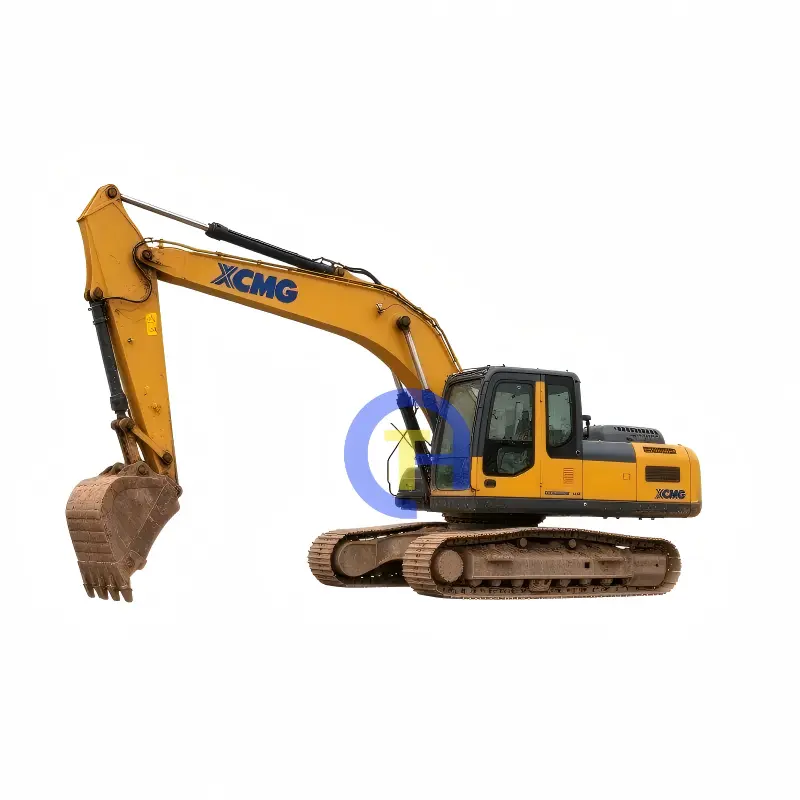
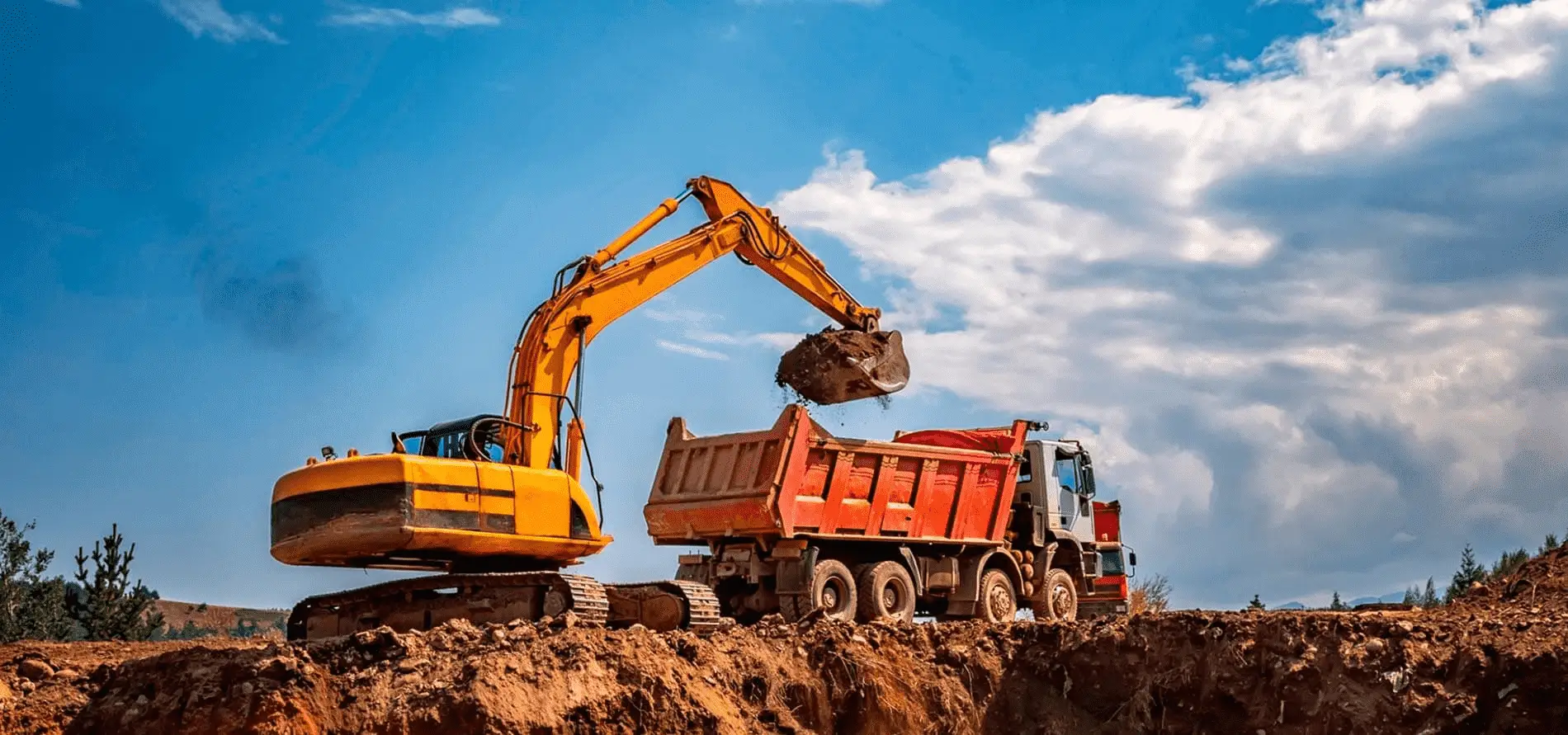
In cities, excavators are primarily used for construction work: today they may dig a ditch, tomorrow they may repair a slope, and the day after that they may clear a site; they also frequently need to relocate, coordinate with manual laborers, and adapt to confined spaces. Their value lies in their flexibility, versatility, and ease of operation—they are ideally suited for almost any type of task. Excavators in mines, by contrast, have a much simpler and more austere role: they load the blasted ore and waste rock into mining trucks bucket by bucket, enabling the subsequent transportation, crushing, and ore-processing systems to continue moving forward without interruption.
This means that the design philosophies behind the two types of excavators have differed from the outset. Urban excavators are like versatile multi-taskers on construction sites; they need to be capable of performing a wide range of tasks. Mining excavators, by contrast, are more like primary equipment on production lines: they do not need to switch contexts daily to demonstrate flexibility; instead, they must perform heavy-load operations repeatedly, stably, and for extended periods within the same high-intensity operating environment. At mining sites, the focus is not on “whether this machine can do something else,” but rather on “how many truckloads it can load in a day, whether it can minimize downtime, and whether its bucket, bucket teeth, and hydraulic system can withstand the demands.” Although they are both excavators, the roles they actually perform are fundamentally different.
The most obvious difference is, of course, the overall size. 20-ton-class excavators are already commonplace at urban construction sites; their body length is approximately 4.5 meters and their height around 3 meters, which is sufficient for most municipal and infrastructure tasks. The R9800, by contrast, operates on a completely different scale; in the image, it is used for visual comparison at approximately 24.5 meters in length and around 11 meters in height, with a total machine weight of roughly 800 tons. Mining excavators are designed to this scale because they deal not with loose soil, but with mined rock following blasting. The ore blocks are large, have sharp edges, and generate strong impact forces; when the bucket is inserted, the operation feels less like digging soil and more like “biting” into a pile of hard rock. If the equipment is too light, it cannot stand steadily; if the structure is too thin, it cannot withstand the loads; and if the counterweight is insufficient, the machine becomes prone to strain during rotation or full-bucket lifting. Therefore, the size of a mining excavator is defined not merely by a large bucket or a large body, but by the fact that its undercarriage, boom, bucket arm, rotating platform, counterweight, and overall structure must all be redesigned around heavy-load operating conditions.
The same applies to the powertrain. When ordinary people look at a car, they focus on horsepower, displacement, and engine RPM; when they look at an excavator, power is still essential, but for mining excavators, the priority isn’t simply going fast—it’s whether the machine can maintain continuous power output under heavy loads. A 20-ton-class excavator typically has a power output in the 100 kW range, which is sufficient for municipal and earthwork operations; by contrast, the R9800’s engine power approaches the 3,000 kW range, making its powertrain a completely different scale. The daily operations of a mining excavator may seem simple: lower the bucket, excavate, lift, rotate, load the vehicle, and then return to the ore pile to begin the next cycle. Yet behind each cycle lies a rigorous test of the engine, hydraulic system, cooling system, and overall machine integration. Insufficient power slows excavation; inadequate hydraulic support causes sluggish movement; and poor heat dissipation leads to high temperatures during continuous operation. On an urban construction site, if an excavator stops for a short while, it may only slow down the specific work area; in a mine, however, if the primary excavator halts, haul trucks may have to queue, crushing stations may have to wait for material, and the entire downstream chain will be affected.
The bucket is also a particularly interesting aspect. When laypeople look at a mining excavator, their first reaction is usually, “This bucket is really huge.” However, what truly matters on site is not merely whether it is large, but whether it can withstand the load. A 20-ton-class excavator typically has a bucket capacity of around 1 cubic meter, primarily designed for earthwork, sand and gravel, construction spoil, and general operating conditions; by contrast, the R9800’s bucket capacity can reach several tens of cubic meters—up to approximately 47.5 m³ for the reverse bucket and about 42 m³ for the forward bucket. This difference is not simply a matter of “a larger bucket”; rather, the nature of the work being performed has changed entirely.
Urban excavators typically load soil, sand, construction debris, or ordinary stone materials; consequently, their buckets naturally experience wear. In contrast, mining operations deal with hard rock following blasting, which subjects the equipment to far greater wear and impact. Bucket teeth, blade plates, side plates, and wear-resistant plates may appear merely as steel components, but in reality, they are the components that demand daily evaluation at the mining site. If the bucket teeth become excessively worn, their cutting force will decrease; if the wear-resistant plates have insufficient service life, the bucket’s service life will be shortened; and if the bucket design is unsuitable, the loading cycle will also be affected. Therefore, when evaluating a bucket in a mining environment, one should not focus solely on its size; instead, one should consider how many buckets are needed to load a single mining truck, whether wear costs are high, whether part replacements are cumbersome, and whether large boulders of ore will impair efficiency.
Looking further into the actual site, it becomes clear that mining excavators do not operate in isolation; they must work in coordination with mining trucks. At urban construction sites, excavators are often used to load spoil trucks primarily to clear the work area; whether the trucks arrive slightly earlier or later will naturally have an impact, but that does not necessarily immediately become a systemic issue. Mines are different. In a mine, one excavator is paired with several mining trucks; the time required to load a truck with several buckets, whether the trucks wait for the excavator or the excavator waits for the trucks, all affect production output. Equipment such as the R9800 was originally designed for loading in large-scale mines; it is compatible with mining trucks rated at 300 tonnes, 330 tonnes, 360 tonnes, and 375 tonnes, rather than ordinary construction-site spoil trucks. Mining truck tires are inherently close to a 4-meter width; if an adult stands beside them, they are less than half the tire’s height. Given this proportion, anyone can understand at a glance that this is no longer the scale used for transportation at urban construction sites.
A mine is not a solo performance; it is more like an open-air production line. If the excavator is too small, a single truckload of ore requires many buckets, thereby extending the overall timeline; if the truck is too small, the large excavator cannot fully utilize its capacity; and if the transport routes, scheduling, and receiving capacity of the crushing plant cannot keep pace, even the fastest loading at the front may result in congestion at the rear. When evaluating whether an excavator is effective at an urban construction site, the focus is largely on its agility, ease of relocation, and ability to adapt to different work processes; when evaluating an excavator in a mine, however, it must be viewed within the “excavation and loading—transportation—crushing” system. It does not perform a single action in isolation; rather, it determines the rhythm of an entire production chain.
Therefore, while mining excavators may appear “clunky,” this is not actually a drawback. They do not need to navigate narrow streets and alleys like urban excavators, nor do they need to frequently switch between disparate operational tasks. More importantly, they offer stability, wear resistance, impact resistance, and the ability to operate continuously. Mining environments involve heavier dust, more intense rock impacts, and longer operating hours; many pieces of equipment do not stop after just a few hours of operation, but instead operate continuously around shift schedules. Heat dissipation, dust protection, protection, lubrication, and maintenance convenience may not seem as intuitive as “how much power it has” or “how large its bucket capacity,” yet they determine whether the equipment can remain operational long-term at the mining site. When you actually visit the site and inspect the equipment, whether it performs well depends not merely on the brochures, but on how many hours it operates daily, how often it needs to shut down, whether the operator is willing to use it, and whether maintenance personnel find it easy or difficult to service.
This is also why excavators at mines often give the impression of being “steel monsters.” Their size is not merely a result of being enlarged; their weight is not intended to create a showy appearance. They are designed to handle hard rock, heavy loads, continuous loading, and system efficiency. A 20-ton excavator in an urban setting functions more like a construction tool, emphasizing flexibility and adaptability; a mining excavator such as the R9800 functions more like production equipment, emphasizing stability, wear resistance, heavy-load capacity, and continuous loading efficiency. One must be capable of “doing a little of everything” in complex construction sites; the other must be able to “consistently perform the heaviest tasks over the long term” in a mine pit.
Thus, although hydraulic excavators used at urban construction sites and those used in mines share a similar name, their roles differ: the former address construction-related needs, while the latter address production-related needs. When viewed within their respective settings, this becomes readily apparent: an urban excavator is like a skilled operator with nimble movements, moving wherever needed; a mining excavator, by contrast, is like a silent, primary piece of equipment—unassuming in appearance, yet with every bucketful it makes a contribution to the rhythm of mine production.
Summary: Behind the exaggerated appearance of the “steel monster” lies a design philosophy centered on heavy-duty capacity, wear resistance, and continuous production.