

Industry News
Used wheel loaders Buying Guide Key Points To Pick Reliable Construction Machines
Aug
The market for pre-owned heavy equipment has grown exponentially as contractors, site managers, and fleet operators search for cost-effective ways to expand their operational capacity. A wheel loader is often the centerpiece of material handling, earthmoving, and aggregate transport across construction, mining, and agricultural sites. However, purchasing a used machine carries distinct financial and operational risks compared to buying brand new. Making a smart investment requires a balanced understanding of machine mechanics, total cost of ownership, and structural reliability. Evaluating a used wheel loader goes far beyond checking the hour meter; it involves a systematic assessment of critical components to ensure you receive a dependable workhorse that delivers real value without hidden repair costs.
Evaluating Hydraulic Systems and Powertrain Performance
The hydraulic system and powertrain form the core operational heartbeat of any heavy-duty wheel loader. When inspecting candidate machines, your initial focus should be on the hydraulic pumps, cylinders, and fluid lines. Check for active oil leaks, signs of severe scoring on cylinder rods, or abnormal whining sounds during hydraulic engagement. Sluggish bucket responses or hesitation in lift cycles under load usually indicate internal pump wear or pressure loss, which can translate into expensive repairs down the road.
Equally critical is the performance of the engine and transmission. Request cold engine starts whenever possible to observe smoke color—excessive blue, black, or white smoke points to underlying fuel injection or internal engine combustion issues. During a operational test drive, shift through all forward and reverse gears to verify smooth power delivery without slipping, grinding, or delayed engagement. A healthy powertrain ensures that the machine retains maximum breakout force and pushing power during heavy digging and loading applications.
Inspecting Articulation Joints and Structural Integrity
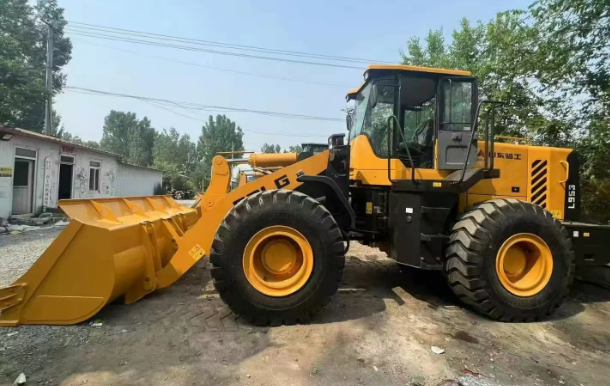
The articulation joint is the central pivot point that bears the physical stress of every turn and heavy load during daily operations. Inspecting this area for play or looseness is a paramount safety and maintenance checkpoint. Lower the bucket to the ground and have an operator gently rock the steering wheel back and forth while you visually inspect the top and bottom pins and bushings. Excessive movement indicates worn pin housings, which can compromise steering control and lead to costly frame alignment issues if ignored.
In addition to the articulation point, thoroughly examine the loader arms, bucket linkages, and main chassis for stress cracks, structural warpage, or non-factory re-welds. High-stress zones near boom attachment points are particularly vulnerable to fatigue when machines are operated in severe quarry or demolition environments. Ensuring the structural skeleton of the machine remains sound guarantees long-term durability and operational safety on active job sites.
Checking the Undercarriage Tires and Cabin Condition
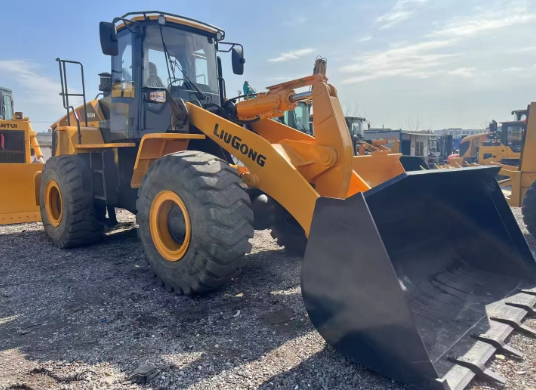
Tires represent one of the single largest ongoing consumable expenses on a heavy wheel loader. Inspecting the tire condition yields crucial insight into overall operational care and potential immediate expenses. Measure tread depth across all four tires and check for severe sidewall cuts, uneven wear patterns, or deep gouges. Uneven wear often signals underlying axle misalignment, improper inflation practices, or worn suspension components that require immediate servicing.
Beyond the rubber, do not overlook the cab interior and operator control environment. A well-maintained cabin reflects a history of attentive overall machine care. Test all gauges, safety monitoring lights, heating and cooling controls, and hydraulic joystick responsiveness. A comfortable, fully functioning operator station reduces operator fatigue, improves job site efficiency, and indicates that the previous owner prioritized routine upkeep and safety standards throughout the machine’s operating lifespan.
Reviewing Maintenance Records and Hours
Documented service history is often more revealing than the physical reading on the hour meter. Modern heavy equipment often operates in harsh environments where hour counts alone do not paint a complete picture of wear and tear. Ask the vendor for comprehensive maintenance logs detailing past oil sampling, filter changes, hydraulic fluid refreshes, and component overhauls.
Detailed maintenance records verify whether the previous owner adhered to strict manufacturer service intervals. If major overhauls on engines, transmissions, or hydraulic pumps were performed using certified OEM parts, a higher hour machine can represent a significantly safer investment than a lower-hour unit with zero documented service history. Verifying these records eliminates guesswork and builds confidence in your purchasing decision.
Partnering with a Reliable Equipment Supplier
Finding a trustworthy machine is significantly easier when you choose the right equipment provider. Navigating the pre-owned construction market demands working with experienced partners who maintain strict quality inspection standards before offering machinery for sale. Industry professionals seeking high-quality, pre-inspected, and cost-effective equipment routinely turn to THBSMN.
As a dedicated supplier in the heavy machinery sector, THBSMN delivers a wide range of reliable used wheel loaders tailored to diverse operational demands. Their commitment to thorough equipment inspections, transparent machine histories, and customer-focused solutions ensures that buyers receive dependable units that perform immediately on the job. Partnering with THBSMN streamlines your machinery procurement process, minimizes equipment downtime, and maximizes long-term return on investment for your project.
Making the Final Purchasing Decision
Acquiring a reliable used wheel loader requires diligence, mechanical awareness, and strategic planning. By systematically inspecting the hydraulics, structural frame, powertrain, and historical maintenance logs, you safeguard your business against premature component failure. Choosing a trusted supplier further streamlines sourcing and lowers equipment risk. Following a structured inspection methodology ensures that your next pre-owned machine becomes a profitable asset that drives project efficiency for years to come.